
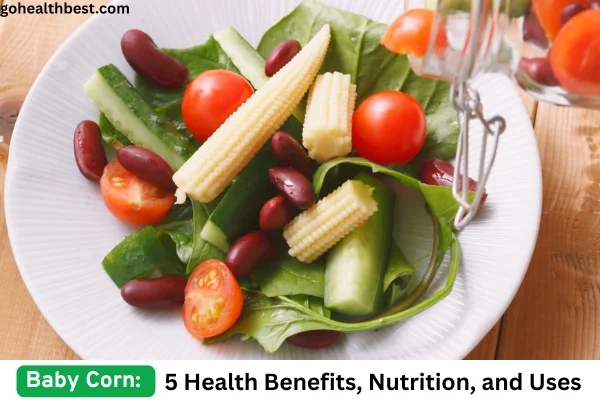
Baby corn is one of those vegetables that looks small and very simple, but it can make our everyday meals much more interesting. You may have seen it in stir-fries, Chinese dishes, soups, salads, noodles, and some vegetable curries.
It is very crunchy, mildly sweet, and very easy to cook. But is baby corn a healthy option? What nutrients does it contain? Can you eat it every day? And is it a better option than regular corn?
Let’s take a closer look.

What Is Baby Corn?
It is a simple type of young corn harvested before the kernels fully mature.
Unlike regular corn, the entire tender cob can be eaten. This is one reason it is so popular in Asian cooking.
It has a mild flavor with a crunchy texture. It can be eaten raw or cooked by steaming, boiling, grilling, and roasting.
Because it has a relatively mild taste, it works well with many different vegetables as well as spices.
You can also learn more about Corn Flour: The full Guide to Uses, Benefits & Recipes.
- What Is Baby Corn?
- Baby Corn Nutrition
- Health Benefits of Baby Corn
- Baby Corn vs Regular Corn: What's the Difference?
- Is Baby Corn Good for Weight Loss?
- Is Baby Corn Good for Diabetes?
- Can we Eat Baby Corn Raw?
- Best Ways to Cook Baby Corn
- Easy Baby Corn Recipe
- Are There Any Side Effects of Baby Corn?
- Final Thoughts
- Frequently Asked Questions About Baby Corn
Baby Corn Nutrition
It can be a very useful addition to a balanced diet. It is relatively low in calories and provides dietary fiber along with several types of vitamins and minerals.
The exact nutritional value depends on whether you eat it fresh, canned, cooked, or as part of a prepared dish.
Generally, it provides us:
⦁ Dietary fiber
⦁ Carbohydrates
⦁ Small amounts of protein
⦁ Vitamin C
⦁ Folate
⦁ Potassium
⦁ Magnesium
⦁ Other plant compounds
One thing to remember is that the baby corn itself may be quite light, but as per my experience, the final dish can be very different.
For example, lightly steamed baby corn is very different nutritionally from deep-fried baby corn covered in a rich sauce.
Health Benefits of Baby Corn
1. May Support Our Digestive Health
Here, one of the useful things about it is its fiber content.
Dietary fiber can help support normal bowel movements and can be part of a healthy digestive system.
If your meals do not have many types of vegetables, you can adding baby corn can be an easy way to increase your overall vegetable and fiber intake.
You can just increase fiber slowly if you’re not used to eating it, especially if you tend to experience bloating or gas.
If you are supporting your digestive health, then you can try Black Grapes: 10 Amazing Benefits, Nutrition, Uses, Side Effects.
2. It Can Fit Into Your Weight-Loss Diet
If you are trying to manage your weight, then baby corn can be a best vegetable option to include in your meal plan.
It adds volume and crunch without being particularly calorie-dense.
You can try adding it to a vegetable stir-fry with broccoli, mushrooms, capsicum, carrots, and beans.
However, it is very important to be realistic: it does not directly burn your fat or cause weight loss.
Here, your overall calorie intake, your food choices, your physical activity, sleep, and lifestyle play an important role.
3. It Can Add More Variety to Your Diet Plan
Healthy eating doesn’t have to mean you eat the same vegetables every day.
Here, it can make simple meals more interesting.
You can add it to:
⦁ Salads
⦁ Soups
⦁ Stir-fries
⦁ Fried rice
⦁ Noodles
⦁ Wraps
⦁ Vegetable curries
⦁ Grilled vegetable dishes
This variety can make it much easier to stick with a balanced diet over the long term.
4. Gives Antioxidant Nutrients
It is rich in vitamin C and other plant compounds that contribute to your overall antioxidant intake.
Here, Antioxidants very helpful to protect cells from oxidative stress.
But it’s very important not to think about one vegetable as a cure-all. A diet containing many different colorful vegetables and fruits is a much better kind of approach.
5. May Be a Best Choice for a Light Meal
It has a naturally crunchy texture, so you don’t need a heavy sauce to make it very enjoyable.
You can lightly cook baby corn with garlic, black pepper, capsicum, mushrooms, or broccoli; it can make a simple side dish.
For a more complete meal, you can combine it with some protein source such as beans, lentils, tofu, paneer, eggs, chicken, as well as fish.
Baby Corn vs Regular Corn: What’s the Difference?
Here, both come from the same plant; baby corn and regular corn are harvested at different stages.
Baby corn is harvested at a very young age, while regular sweet corn is allowed to mature much More.
That’s a big reason they look and taste different.
| Baby Corn | Regular Sweet Corn |
| Harvested very young | Harvested at a later stage |
| Entire tender cob can be eaten | Usually, the kernels are eaten |
| Mild flavor | Sweeter flavor |
| Crunchy texture | Softer, juicier kernels |
| Often used in stir-fries and salads | Commonly eaten as kernels or on the cob |
Neither is automatically a healthier option. Both can be part of a balanced diet.
Is Baby Corn Good for Weight Loss?
It can certainly fit into a weight-loss meal plan.
Its relatively low calorie density makes it very useful when you want to add more vegetables to your plate.
For example, instead of eating a large portion of noodles with a little vegetable, you could use more vegetables such as baby corn, broccoli, mushrooms, and capsicum.
The important point is how you prepare it.
Steamed or lightly stir-fried baby corn is quite different from deep-fried corn served with a rich, sugary sauce.
Is Baby Corn Good for Diabetes?
Here, it can be included in a diabetes-friendly diet, but it isn’t a diabetes treatment.
The overall meal matters.
A better meal might combine baby corn, non-starchy types of vegetables, protein, and high-fiber foods while keeping portions of refined carbohydrates such as white rice under full control.
If you have a problem with diabetes or take glucose-lowering medication, your individual dietary needs should be discussed with your healthcare professional.
If you want to know more options for diabetes, then you can go with Millets: Types, Benefits, Nutrition, Uses & How to Eat Them.

Can we Eat Baby Corn Raw?
Yes, fresh baby corn can be eaten raw.
Its crunchy texture makes it more suitable for salads as well as snack plates.
You can wash fresh baby corn before time of eating.
If you’re using canned type corn, then you can check the label and drain and rinse it if appropriate, especially if you’re trying to reduce your sodium intake.
Best Ways to Cook Baby Corn
There are plenty of easy ways to prepare it.
Stir-Frying
This is probably one of the easiest methods.
Add it to a hot pan with a small amount of oil, garlic, capsicum, mushrooms, or other vegetables you like.
Cook it briefly so it stays crunchy.
Steaming
Steaming keeps the cooking very simple and doesn’t require much oil.
You can season steamed baby corn with black pepper, lemon juice, herbs, or a little spice.
Grilling
It can develop a slightly smoky flavor.
It’s a superb option for barbecues or as part of a grilled vegetable platter.
Adding It to Soups
It works particularly well in vegetable soups as well as any Asian-style soups.
It holds its texture better than many soft vegetables.
You can also try one of the best recipe of the saag paneer.
Easy Baby Corn Recipe
Here’s a simple recipe you can make in about 10 minutes.
Garlic Baby Corn Stir-Fry
Ingredients:
⦁ 1–2 cups baby corn
⦁ One small capsicum
⦁ 2–3 garlic cloves
⦁ One teaspoon cooking oil
⦁ A little Black pepper
⦁ A little salt
⦁ As per your choice: mushrooms or broccoli
Making method:
- First, wash and cut the baby corn.
- Heat the oil in a pan.
- Add garlic and cook briefly.
- Add baby corn and capsicum.
- Stir-fry for a few minutes.
- Add black pepper as well as a small amount of salt.
- Keep the vegetables slightly crunchy.
You can eat it as a side dish or add it to rice, noodles, wraps, or a bowl meal.
Are There Any Side Effects of Baby Corn?
It is generally safe for most people when eaten as part of a normal diet plan.
However, I have seen that many people suddenly eating a lot of fiber can cause gas, bloating, or digestive discomfort in some people.
Also, if you eat any restaurant-style baby corn dishes may contain considerable amounts of oil, salt, refined flour, or sugary sauces.
So if your goal is a healthier meal, then you can go with fresh corn cooked simply is usually a better type of choice.
Final Thoughts
It may be small, but it is one of the surprisingly useful vegetables.
It is crunchy, mild, very easy to cook, and works in everything from salads and soups to stir-fries and curries. It can also help you add more vegetables and fiber to your meals.
The biggest thing to remember is that baby corn itself is not any miracle food. What matters most is your overall eating pattern.
Keep the preparation simple; you can combine it with other vegetables and a good protein source, and enjoy it as part of a varied diet.
Sometimes healthy eating doesn’t need to be complicated. A colorful plate, sensible portions, and foods you actually enjoy can go a long way.
Frequently Asked Questions About Baby Corn
- Is baby corn healthy?
Yes. Here, Baby corn can fit into a healthy diet options. It provides fiber as well as several types of nutrients while being relatively light in calories. The overall healthiness also depends on how it is prepared.
- Can I eat baby corn every day?
For most healthy people, It can be eaten regularly. However, there is no need to eat it every day. Eating a variety of vegetables throughout the week is a better kind of approach.
- Is baby corn good for weight loss?
It can be very useful in a weight-loss diet because it is low in calories and adds volume to meals. However, it does not directly burn fat or cause weight loss.
- Is baby corn high in sugar?
Here, It is not considered a high-sugar food. Its carbohydrate content is relatively modest compared with many common grain-based foods.
- Is baby corn a vegetable or corn?
As per Botanically, It is young corn. In everyday cooking, it is generally treated as a vegetable.
- Can children eat baby corn?
Yes, appropriately maked can be included in a child’s diet. For young children you can go with, cut food into age-appropriate pieces and make sure it is soft enough to reduce choking risk.
- Is canned baby corn healthy options for everyone?
Canned type can still be a convenient food. Check the nutrition label, particularly the sodium content. Draining and rinsing canned vegetables can help reduce some of the sodium.
- Is baby corn better than regular corn?
Not necessarily. Here, both are simply harvested at different time of stages and have different textures and nutritional profiles. Here, both can fit into your balanced diet.